Fresh Vegan Tabbouleh: The Ultimate Middle Eastern Parsley Salad
Introduction
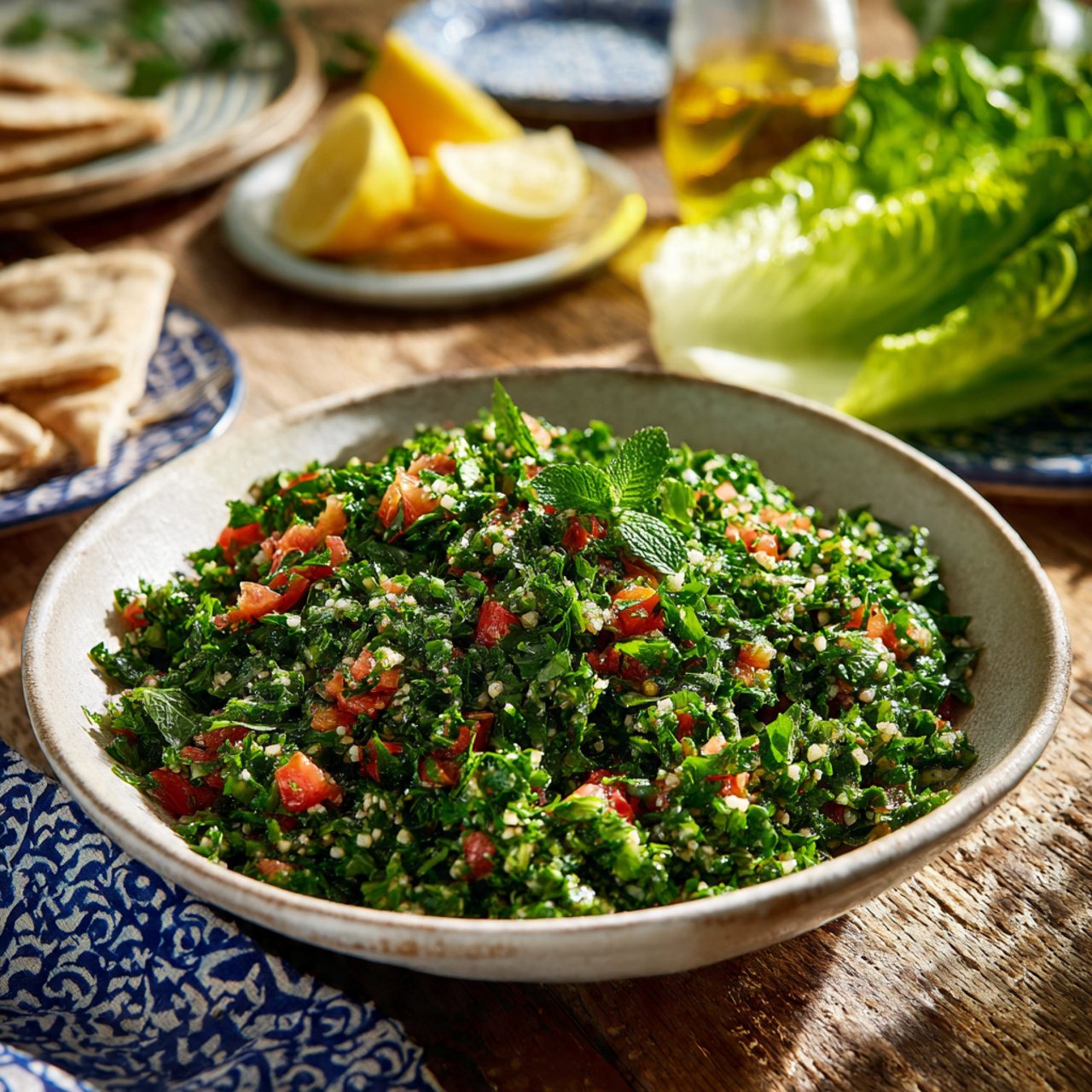
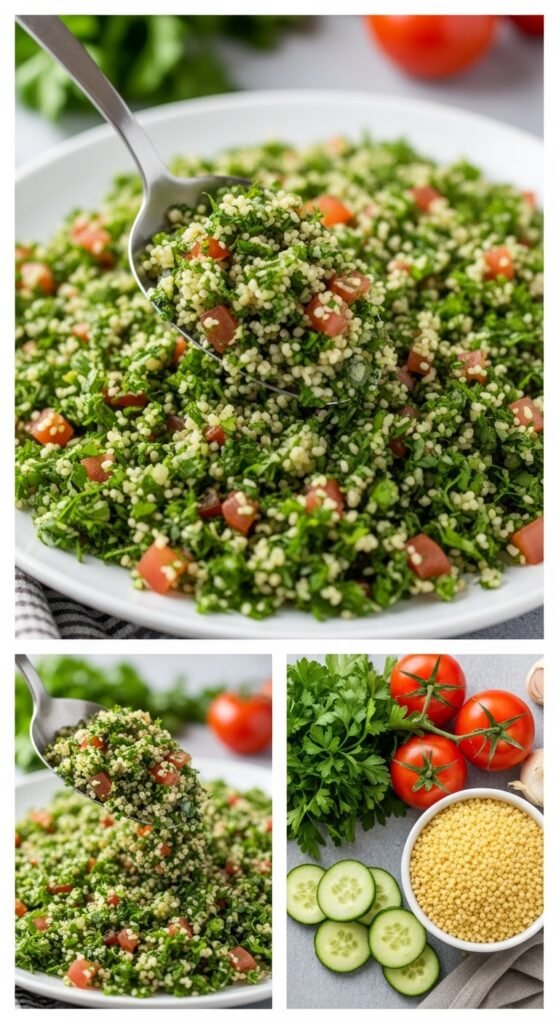
There’s a reason vegan tabbouleh has captivated food lovers around the world for centuries—this vibrant, herb-packed salad is an absolute celebration of freshness that awakens every sense with each forkful. Bursting with bright green parsley, juicy ripe tomatoes, fragrant fresh mint, and tender bulgur wheat, all dressed in a simple lemon and olive oil dressing, tabbouleh delivers a flavor experience that’s simultaneously light and deeply satisfying. Whether you’re looking for a refreshing summer side dish, a nutritious lunch that travels beautifully, or an impressive addition to your Mediterranean mezze spread, this authentic tabbouleh recipe is about to become your new obsession.
What makes this Lebanese tabbouleh truly special is its remarkable simplicity paired with extraordinary flavor impact. Unlike heavier grain salads where the grain takes center stage, authentic tabbouleh is gloriously herb-forward, with fresh parsley as the undisputed star of the show. The bulgur wheat plays a supporting role, adding pleasant chew and substance without overwhelming the bright, fresh flavors. Every bite delivers an invigorating burst of herbs, the sweet acidity of perfectly ripe tomatoes, the sharp bite of green onion, and the bright, citrusy punch of freshly squeezed lemon juice—all tied together with fruity extra virgin olive oil.
This easy tabbouleh recipe is perfect for so many occasions throughout the year. It’s the ideal dish to bring to summer potlucks and barbecues, offering a refreshing counterpoint to heavier grilled fare. It makes a wonderful light lunch packed with vitamins and fiber. It’s essential for building an impressive Middle Eastern mezze platter for entertaining. And it’s a fantastic meal prep option since it actually improves after resting, making it taste even better the next day. Once you master this authentic recipe, you’ll find yourself craving its fresh, clean flavors again and again.
History & Background
Tabbouleh boasts a rich culinary heritage that stretches back centuries to the mountains of Lebanon and Syria, where it remains a beloved staple of everyday eating and special celebrations alike. The name “tabbouleh” (also spelled tabbouli, tabouli, or tabouleh) derives from the Arabic word “tabil,” meaning “to season” or “to dip,” reflecting the dish’s origins as a seasoned salad meant to be scooped up with romaine lettuce leaves or flatbread.
The origins of tabbouleh are deeply rooted in the Levantine region, particularly Lebanon, where it’s considered a national treasure and an essential component of the traditional mezze spread. Lebanese cuisine places enormous emphasis on fresh herbs, vegetables, and olive oil, and tabbouleh exemplifies this philosophy perfectly. In traditional Lebanese preparation, parsley dominates the dish so thoroughly that tabbouleh appears almost entirely green, with bulgur wheat used sparingly—just enough to add texture without detracting from the herbs’ brightness.
The dish gained international recognition as Lebanese immigrants spread throughout the world during the 20th century, bringing their culinary traditions to new homes in North and South America, Europe, Australia, and beyond. Interestingly, as tabbouleh traveled, its proportions often shifted to accommodate different tastes and ingredient availability. Many Western adaptations increased the bulgur ratio significantly, creating a heartier, grain-forward salad quite different from the authentic herb-dominant original. Both versions have their merits, but this recipe honors the traditional Lebanese approach with its glorious abundance of fresh parsley.
In Lebanese culture, tabbouleh is far more than just a salad—it’s a symbol of hospitality, celebration, and connection to the land. The dish appears at virtually every gathering, from casual family meals to elaborate wedding feasts. Making tabbouleh is often a communal activity, with family members gathering to chop the enormous quantities of parsley required. This tradition of preparing food together strengthens bonds and passes culinary knowledge from generation to generation, making tabbouleh as much about culture and community as it is about sustenance and flavor.
Why You’ll Love This Recipe
This authentic vegan tabbouleh is the kind of recipe that earns devoted fans because it delivers extraordinary flavor from remarkably simple, wholesome ingredients.
The combination of abundant fresh herbs, perfectly ripe vegetables, and a bright lemon-olive oil dressing creates a salad that’s simultaneously light and satisfying. It cleanses the palate, energizes the body, and leaves you feeling genuinely nourished rather than weighed down.
Here’s why this Middle Eastern parsley salad will become your new favorite:
- Explosively fresh flavor – The abundance of parsley and mint creates an invigorating taste experience unlike any other salad
- Naturally vegan and healthy – No adaptations needed; traditional tabbouleh is inherently plant-based and packed with nutrients
- Incredibly nutritious – Loaded with vitamins A, C, and K from parsley, plus fiber and protein from bulgur wheat
- Simple ingredients – Made with affordable, accessible ingredients you can find at any grocery store
- No cooking required – Just soaking bulgur and chopping; perfect for hot days when you don’t want to heat up the kitchen
- Make-ahead friendly – Actually tastes better after resting, making it ideal for meal prep and entertaining
- Versatile serving options – Works as a side dish, light main, wrap filling, or mezze component
- Travels beautifully – Perfect for picnics, potlucks, and packed lunches without getting soggy
- Naturally gluten-free option – Easily adapted using quinoa or cauliflower rice instead of bulgur
- Impressive yet effortless – Looks stunning on the table despite requiring only basic knife skills
Ingredient Notes
Understanding each ingredient’s role helps you create the most authentic, delicious vegan tabbouleh possible. Quality matters enormously with such simple preparations, so choose the best ingredients you can find.
Fresh Flat-Leaf Parsley: This is unquestionably the star ingredient and should constitute the majority of your tabbouleh. Use flat-leaf (Italian) parsley, not curly parsley, which has a different texture and less vibrant flavor. You’ll need a substantial amount—typically 3-4 large bunches for authentic proportions. The parsley must be fresh, vibrant, and thoroughly dried after washing to prevent a watery salad. Remove the thick stems and chop the leaves very finely for proper texture.
Fresh Mint: Mint provides a cool, aromatic counterpoint to the parsley’s grassy brightness. Fresh spearmint is traditional, but any fresh mint variety works beautifully. The mint should be used more sparingly than parsley—it’s an accent, not a co-star. Remove stems completely and chop leaves finely to distribute flavor throughout.
Bulgur Wheat: Fine-grain bulgur (#1) is traditional and ideal for tabbouleh because it requires only soaking, not cooking. Medium bulgur (#2) also works but may need brief cooking. The bulgur should be soft but still slightly chewy, never mushy. In authentic Lebanese tabbouleh, bulgur is used sparingly—just enough to add pleasant texture without overwhelming the herbs.
Ripe Tomatoes: Quality tomatoes are essential. Use the ripest, most flavorful tomatoes you can find—vine-ripened, heirloom, or Roma tomatoes all work wonderfully. Avoid watery, flavorless supermarket tomatoes in winter; cherry tomatoes or grape tomatoes often have better flavor year-round. Dice them small and remove excess seeds and liquid to prevent a soggy salad.
Green Onions (Scallions): These add sharp, fresh allium flavor without the harshness of raw white or red onion. Use both the white and light green parts, sliced very thinly. Some versions include finely diced white onion instead, which adds more bite.
Fresh Lemon Juice: Absolutely essential and non-negotiable—you must use freshly squeezed lemon juice, never bottled. The bright acidity of fresh lemons brings the entire dish to life. You’ll need the juice of 2-3 large lemons for proper balance. The lemon flavor should be pronounced but not overwhelming.
Extra Virgin Olive Oil: Use the best quality extra virgin olive oil you can afford. Since the oil isn’t cooked, you’ll taste its full flavor—fruity, peppery, or grassy notes will all come through. Lebanese and Middle Eastern olive oils are traditional, but any high-quality EVOO works beautifully.
Salt and Black Pepper: Fine sea salt and freshly ground black pepper are essential for bringing all the flavors together. Taste and adjust seasoning carefully—properly salted tabbouleh sings, while underseasoned tabbouleh tastes flat.
Optional Additions: Some recipes include diced cucumber for extra crunch, a pinch of allspice or cinnamon for warmth, or a small amount of sumac for additional tanginess. These aren’t traditional but are acceptable variations.
Equipment Needed
Tabbouleh requires minimal equipment, but a sharp knife and good cutting board are essential for the extensive chopping involved.
- Large sharp chef’s knife (essential for fine chopping)
- Large cutting board (bigger is better for the volume of herbs)
- Large mixing bowl
- Small bowl (for soaking bulgur)
- Fine-mesh strainer (for draining bulgur)
- Salad spinner or clean kitchen towels (for drying herbs)
- Citrus juicer or reamer
- Measuring cups and spoons
- Large spoon or spatula for mixing
- Serving bowl or platter
- Optional: food processor (for rough-chopping parsley, though hand-chopping is preferred)
📋 Recipe Card
Prep Time: 30 minutes
Cook Time: 0 minutes (no cooking required)
Soaking Time: 15-20 minutes (for bulgur)
Resting Time: 30 minutes minimum (for flavors to meld)
Total Time: 1 hour 15 minutes
Yield: 8 servings
Category: Salad, Side Dish, Appetizer
Method: No-Cook, Raw
Cuisine: Lebanese, Middle Eastern, Mediterranean
Diet: Vegan, Dairy-Free, Nut-Free
Description: This authentic vegan tabbouleh features an abundance of fresh parsley and mint with juicy tomatoes, green onions, and tender bulgur wheat, all dressed in bright lemon juice and fruity olive oil. A refreshing, nutritious Middle Eastern salad that’s perfect for summer entertaining and meal prep.
Ingredients
For the Bulgur:
- ½ cup fine bulgur wheat (#1)
- ¾ cup boiling water
- Pinch of salt
For the Salad:
- 4 cups fresh flat-leaf parsley, very finely chopped (about 4 large bunches)
- ½ cup fresh mint leaves, very finely chopped (about 1 large bunch)
- 3 medium ripe tomatoes, seeded and finely diced (about 1½ cups)
- 4 green onions (scallions), white and light green parts, thinly sliced
- 1 small cucumber, seeded and finely diced (optional)
For the Dressing:
- ⅓ cup fresh lemon juice (about 2-3 large lemons)
- ⅓ cup extra virgin olive oil
- 1 teaspoon fine sea salt (adjust to taste)
- ½ teaspoon freshly ground black pepper
- ¼ teaspoon ground allspice (optional, for warmth)
For Serving:
- Romaine lettuce leaves (for scooping)
- Lemon wedges
- Extra olive oil for drizzling
- Warm pita bread
Instructions
Step 1: Prepare the Bulgur
Place the fine bulgur wheat in a small bowl with a pinch of salt. Pour the boiling water over the bulgur, stir once, and cover with a plate or plastic wrap. Let stand for 15-20 minutes until the bulgur is tender but still has a slight chew. Fine bulgur absorbs water quickly and shouldn’t need any additional cooking. After soaking, drain any excess water through a fine-mesh strainer and press gently to remove moisture. Spread on a clean kitchen towel to dry slightly while you prepare the other ingredients.
Step 2: Wash and Dry the Herbs Thoroughly
Wash the parsley and mint in several changes of cold water to remove any grit or dirt. This step is crucial—gritty herbs ruin tabbouleh. After washing, dry the herbs completely using a salad spinner and/or clean kitchen towels. Wet herbs will make your tabbouleh watery and dilute the dressing. Take the time to get them truly dry.
Step 3: Prepare the Parsley
Remove the thick stems from the parsley—you want only the leaves and the very thin, tender stems. Working in batches, gather the parsley into tight bundles and chop very finely using a sharp chef’s knife. The parsley should be minced into tiny pieces, not left in large chunks. This fine chopping is essential for authentic texture and allows the dressing to coat every piece. Transfer chopped parsley to a large mixing bowl.
Step 4: Prepare the Mint
Remove mint leaves from their stems completely—mint stems are tough and unpleasant to eat. Stack the leaves, roll them into a tight cylinder, and slice into thin ribbons (chiffonade), then chop finely. Mint should be chopped just as fine as the parsley. Add to the bowl with the parsley.
Step 5: Prepare the Tomatoes
Cut the tomatoes in half and gently squeeze out the seeds and excess liquid over the sink or into a bowl. This prevents watery tabbouleh. Dice the tomato flesh into small, uniform pieces, about ¼-inch cubes. Add to the herb mixture.
Step 6: Add Remaining Vegetables
Thinly slice the green onions and add to the bowl. If using cucumber, cut it in half lengthwise, scoop out the seeds with a spoon, and dice finely. Add to the bowl along with the prepared bulgur.
Step 7: Make the Dressing
In a small bowl, whisk together the fresh lemon juice, extra virgin olive oil, salt, pepper, and allspice if using. Taste and adjust seasoning—the dressing should be bright and well-balanced. It will taste quite lemony on its own, which is correct; it mellows once mixed with the salad.
Step 8: Combine and Toss
Pour the dressing over the salad and toss gently but thoroughly to combine. Every piece of herb and vegetable should be lightly coated with dressing. Be careful not to overmix or mash the tomatoes.
Step 9: Let Flavors Meld
Cover the bowl and let the tabbouleh rest at room temperature for at least 30 minutes, or refrigerate for up to 2 hours. This resting time is essential—it allows the bulgur to absorb some of the dressing, the flavors to marry, and the overall taste to develop and deepen. Tabbouleh made and served immediately will taste good; tabbouleh that’s rested will taste great.
Step 10: Final Adjustments and Serve
Before serving, taste the tabbouleh and adjust seasoning. It often needs an extra squeeze of lemon juice and pinch of salt after resting. Transfer to a serving bowl or platter, drizzle with additional olive oil, and serve with romaine lettuce leaves for scooping, lemon wedges, and warm pita bread.
Notes
- The ratio of parsley to bulgur is crucial for authentic tabbouleh. Parsley should dominate—if you can see more grain than green, you’ve added too much bulgur.
- Dry your herbs thoroughly. This is the most common mistake and the easiest to avoid.
- Use fine bulgur (#1) for best results. Coarse bulgur requires cooking and creates a different texture.
- Fresh lemon juice is non-negotiable. Bottled lemon juice will produce inferior results.
- Tabbouleh improves with time. It tastes best after 1-2 hours of resting and remains delicious for 2-3 days.
- For gluten-free tabbouleh, substitute quinoa or cauliflower rice for the bulgur.
Nutrition Facts Table
Per serving (approximately 1 cup, based on 8 servings)
| Nutrient | Amount |
|---|---|
| Serving Size | 1 cup (approximately 150g) |
| Calories | 125 kcal |
| Total Fat | 9g |
| Saturated Fat | 1.3g |
| Unsaturated Fat | 7g |
| Trans Fat | 0g |
| Cholesterol | 0mg |
| Sodium | 300mg |
| Total Carbohydrates | 11g |
| Dietary Fiber | 3g |
| Total Sugars | 2g |
| Protein | 2g |
Note: Nutrition information is calculated using standard recipe databases and may vary based on specific ingredients used and portion sizes. Tabbouleh is notably high in Vitamins A, C, and K from the abundant parsley.
Tips & Variations
This classic vegan tabbouleh welcomes thoughtful variations while maintaining its essential fresh, herbaceous character. Here are delicious ways to customize the recipe.
Quinoa Tabbouleh (Gluten-Free): Replace bulgur with ½ cup cooked and cooled quinoa for a protein-rich, gluten-free version. The quinoa should be fluffy and completely cooled before mixing. This variation is particularly popular and works beautifully with the traditional flavors.
Cauliflower Tabbouleh (Grain-Free/Low-Carb): Pulse raw cauliflower in a food processor until it resembles rice, then use in place of bulgur for a very low-carb version. No soaking required—just mix the raw cauliflower rice directly into the salad.
Extra-Herby Tabbouleh: For an even more vibrant version, add ¼ cup of fresh dill or cilantro to the herb mixture. This variation is common in some regions and adds another layer of fresh flavor.
Pomegranate Tabbouleh: Add ½ cup of fresh pomegranate arils for beautiful color contrast, subtle sweetness, and delightful pops of juicy texture. This festive variation is especially popular in fall and winter.
Avocado Tabbouleh: Fold in one diced ripe avocado just before serving for added creaminess and healthy fats. The avocado makes the salad more substantial as a main dish.
Spiced Tabbouleh: Increase the allspice to ½ teaspoon and add ¼ teaspoon each of cinnamon and cumin for a warmer, more aromatic version that’s common in some Lebanese households.
Chickpea Tabbouleh: Add 1 cup of cooked chickpeas for extra protein and substance, transforming the side dish into a satisfying main course salad.
Cherry Tomato Version: Use halved cherry or grape tomatoes instead of diced regular tomatoes for pops of sweetness and a slightly different texture. This variation works especially well when good tomatoes are hard to find.
Pro Chef Tips
Elevate your vegan tabbouleh from good to exceptional with these professional techniques that make all the difference.
Master the parsley-to-bulgur ratio. Authentic Lebanese tabbouleh should be overwhelmingly green. The bulgur is a supporting player, not a co-star. If your finished tabbouleh looks more brown than green, you’ve added too much grain. Aim for a ratio where parsley comprises at least 75% of the volume.
Chop, don’t process. While a food processor can speed things up, hand-chopping produces superior texture. Processors tend to bruise herbs and release excess moisture, resulting in a less vibrant color and slightly bitter taste. The meditative process of hand-chopping is part of tabbouleh’s tradition.
Use the finest chop possible. Tabbouleh should have a uniform, fine texture where every ingredient is minced small enough that each forkful contains all components. Large chunks of anything disrupt the balance. Invest the time in proper knife work.
Dry your herbs obsessively. This cannot be overstated. Wet herbs are the number one cause of disappointing tabbouleh. After washing, spin in a salad spinner, then spread on clean kitchen towels and gently pat or roll to absorb remaining moisture. Some cooks even refrigerate spread herbs for 30 minutes to ensure dryness.
Season in stages. Add salt to the bulgur water, to the dressing, and taste again before serving. Tabbouleh needs assertive seasoning because the abundant herbs can absorb a lot of salt. Underseasoned tabbouleh tastes flat despite having good ingredients.
Let it rest, then adjust. The flavors transform significantly after 30-60 minutes of resting. Always taste and adjust lemon juice, salt, and olive oil before serving. Refrigerated tabbouleh often needs a fresh squeeze of lemon and drizzle of oil to brighten it back up.
Common Mistakes to Avoid
Even this simple recipe can go wrong without proper attention to key techniques. Here’s how to ensure your vegan tabbouleh turns out perfectly every time.
Using wet herbs: This is the most common and damaging mistake. Wet parsley and mint dilute the dressing, create watery salad, and result in a less vibrant final product. Take extra time to dry herbs thoroughly—it makes an enormous difference.
Wrong parsley-to-grain ratio: Many Western adaptations use far too much bulgur, creating a grain salad with some herbs rather than an herb salad with some grain. Authentic tabbouleh should be at least 75% herbs. When in doubt, use less bulgur.
Using curly parsley: Curly parsley has a different texture and less vibrant flavor than flat-leaf (Italian) parsley. It also doesn’t chop as finely. Always use flat-leaf parsley for authentic tabbouleh.
Using bottled lemon juice: Fresh lemon juice is essential. Bottled lemon juice has a cooked, flat taste that completely changes the character of the dish. Take the extra minute to squeeze fresh lemons.
Chopping too coarsely: Large chunks of herbs and vegetables create an unpleasant, unbalanced eating experience. Every component should be finely minced so each bite contains all flavors in proper proportion.
Serving immediately without resting: Tabbouleh needs at least 30 minutes for the flavors to meld and the bulgur to absorb some dressing. Freshly made tabbouleh tastes sharp and disjointed; rested tabbouleh tastes harmonious and complete.
Forgetting to seed tomatoes: Tomato seeds and their surrounding gel contain a lot of liquid. Including them makes your tabbouleh watery. Take a moment to squeeze out and discard seeds before dicing.
Storage & Meal Prep
Tabbouleh is an excellent meal prep candidate because it actually improves with time, making it perfect for preparing in advance.
Refrigerator Storage: Store tabbouleh in an airtight container in the refrigerator for up to 3-4 days. The flavors deepen and improve during the first 24-48 hours as ingredients marinate in the lemon-olive oil dressing. The salad remains delicious throughout its storage life, though it does soften slightly over time.
Best Serving Temperature: Tabbouleh can be served chilled or at cool room temperature. Many people prefer it slightly below room temperature—remove from refrigerator about 15-20 minutes before serving for optimal flavor. Cold temperatures mute flavors, so take it out of the fridge before your meal.
Refreshing Before Serving: Refrigerated tabbouleh often benefits from a boost before serving. Add a fresh squeeze of lemon juice, a drizzle of olive oil, and a pinch of salt after stirring. This brightens the flavors and revives the dressing.
Meal Prep Strategy: Make a full batch on Sunday for healthy lunches throughout the week. Portion into individual containers for grab-and-go convenience. The salad travels beautifully without getting soggy, making it perfect for work lunches.
Dressing Separately (Optional): For absolute freshness control, store the dressed tabbouleh as normal, but reserve a tablespoon each of lemon juice and olive oil to add just before serving each portion.
What to Avoid: Don’t add avocado or delicate garnishes until just before serving, as they don’t hold up to storage. The core salad stores beautifully, but some additions are best fresh.
Make-Ahead & Freezer Notes
Strategic preparation makes entertaining effortless and weeknight meals simpler. Here’s how to plan ahead with tabbouleh.
Make-Ahead Timeline: Tabbouleh can be made up to 2 days in advance and stored in the refrigerator. In fact, making it 12-24 hours ahead produces the best results, as the flavors have time to marry and develop. This makes it an ideal dish for entertaining.
Day-Before Preparation: For parties or special occasions, make the complete tabbouleh the day before. Store covered in the refrigerator and bring to cool room temperature before serving. Taste and adjust seasoning, adding fresh lemon juice and olive oil as needed.
Component Prep Strategy: If you prefer assembling closer to serving time, prep components separately. Wash and dry herbs up to 2 days ahead, storing them wrapped in paper towels in a plastic bag. Prepare bulgur and store covered in the refrigerator. Make the dressing and refrigerate. Dice tomatoes day-of to prevent them from becoming too soft.
Partial Assembly Option: You can chop all herbs and prepare the bulgur a day ahead, combining them in a bowl. Add tomatoes, dressing, and final seasonings the day of serving for the freshest presentation.
Freezing Recommendations: Unfortunately, tabbouleh does not freeze well. The fresh herbs become limp and discolored when frozen and thawed, and the tomatoes turn mushy. The texture and bright flavor that make tabbouleh special are lost in the freezing process. This is strictly a fresh-preparation dish.
Large Batch Considerations: This recipe doubles or triples easily for large gatherings. When scaling up, you may need slightly less dressing proportionally—start with less and add more as needed. Prepare extra lemon wedges and olive oil for guests to customize their servings.
Serving Suggestions
This versatile vegan tabbouleh complements a wide range of dishes and fits seamlessly into many different meal contexts.
Traditional Mezze Spread: Serve tabbouleh as part of an authentic Middle Eastern mezze platter alongside hummus, baba ganoush, falafel, stuffed grape leaves (dolmas), olives, pickled vegetables, and warm pita bread. This is the traditional way to enjoy tabbouleh and creates a stunning, shareable feast.
Lettuce Scoops: The traditional Lebanese serving method involves scooping tabbouleh with crisp inner romaine lettuce leaves. The cool, crunchy lettuce provides perfect contrast to the herbs and adds another layer of freshness.
Pita Pockets: Stuff tabbouleh into warm pita bread with hummus and falafel for a satisfying, portable meal. Add pickled turnips and tahini sauce for extra authenticity.
Grain Bowl Component: Use tabbouleh as a fresh, herbaceous component in Mediterranean-inspired grain bowls. Layer with roasted chickpeas, roasted vegetables, hummus, and tahini dressing.
Alongside Grilled Foods: The bright, acidic flavors of tabbouleh cut through rich grilled foods beautifully. Serve alongside grilled vegetables, plant-based kabobs, or stuffed peppers.
Light Summer Meal: Enjoy a generous portion of tabbouleh as a light main course on hot summer days when you want something refreshing and nourishing without feeling heavy.
Wrap Filling: Use tabbouleh as a filling for lavash wraps or tortillas with hummus, roasted vegetables, and greens for a Mediterranean-inspired sandwich.
Beverage Pairings: Tabbouleh pairs beautifully with fresh mint tea (traditional), sparkling water with lemon, crisp white wines like Sauvignon Blanc or Lebanese white wines, or light rosé.
FAQs Section
What type of parsley should I use for tabbouleh?
Always use flat-leaf (Italian) parsley, never curly parsley. Flat-leaf parsley has a more vibrant, less bitter flavor and a tender texture that chops more finely. Curly parsley has a tougher texture and slightly different taste that won’t produce authentic results.
How do I make tabbouleh gluten-free?
Substitute the bulgur wheat with cooked quinoa or cauliflower rice. Quinoa provides similar texture and added protein, while cauliflower rice creates an even lighter, lower-carb version. Both variations are delicious and maintain the essential herb-forward character of the dish.
Why does my tabbouleh taste watery?
The most common causes are wet herbs and unseeded tomatoes. Make sure to dry your parsley and mint completely after washing—use a salad spinner and pat with towels. Also, cut tomatoes in half, squeeze out seeds and excess liquid, then dice. Both steps are essential for proper texture.
How fine should I chop the herbs?
Very fine! The herbs should be minced into tiny pieces, not left in visible chunks. Authentic tabbouleh has a uniform, almost fluffy texture where every forkful contains all ingredients in balanced proportion. Take your time with the chopping—it’s the most important technique in the recipe.
Can I use a food processor to chop the parsley?
While possible, it’s not recommended. Food processors tend to bruise herbs, release excess moisture, and create uneven pieces with some parts pulverized and others still chunky. Hand-chopping produces superior color, texture, and flavor. If you must use a processor, pulse very briefly in small batches.
How long does tabbouleh last in the refrigerator?
Properly stored in an airtight container, tabbouleh keeps well for 3-4 days. It actually tastes best after 12-24 hours of resting, making it ideal for advance preparation. The herbs do soften slightly over time, but the flavor remains excellent.
What’s the correct ratio of parsley to bulgur?
In authentic Lebanese tabbouleh, parsley should dominate—the salad should appear almost entirely green. Aim for at least 75% herbs to 25% (or less) bulgur by volume. Many Western adaptations use too much grain. When in doubt, use less bulgur.
Can I make tabbouleh without bulgur entirely?
Yes! Some variations use only herbs, tomatoes, and dressing with no grain at all. This ultra-light version is refreshing and very low in carbohydrates. You can also substitute quinoa, couscous, or cauliflower rice if you want some bulk without wheat.
Conclusion
This authentic vegan tabbouleh is a celebration of freshness that proves the most memorable dishes often come from the simplest ingredients prepared with care and attention. The glorious abundance of parsley and mint, the bright punch of fresh lemon, the fruity richness of olive oil, and the subtle chew of bulgur wheat combine to create something far greater than the sum of its parts. It’s the kind of dish that makes you feel genuinely good—energized and nourished rather than weighed down.
What I love most about tabbouleh is how it connects us to centuries of culinary tradition while remaining completely relevant to modern eating. This is ancestral food at its finest: simple, wholesome ingredients transformed through basic technique into something beautiful and delicious. The process of washing, chopping, and assembling is almost meditative, and the result is a dish that honors both the ingredients and the traditions from which it comes.
I hope you’ll make this Lebanese tabbouleh a regular part of your cooking repertoire. It’s perfect for summer entertaining, weekday meal prep, Mediterranean mezze nights, and any time you want to fill your plate with fresh, vibrant plant-based goodness. Once you experience how satisfying and delicious properly made tabbouleh can be, you’ll understand why it has remained beloved for centuries.
If you create this tabbouleh, I’d love to hear about your experience! Leave a comment below sharing your favorite variations, serving suggestions, or any questions you might have. And if this fresh, beautiful salad earns a place at your table, please share the recipe on Pinterest so other home cooks can discover the joy of authentic Middle Eastern cooking. Happy chopping, friends!